
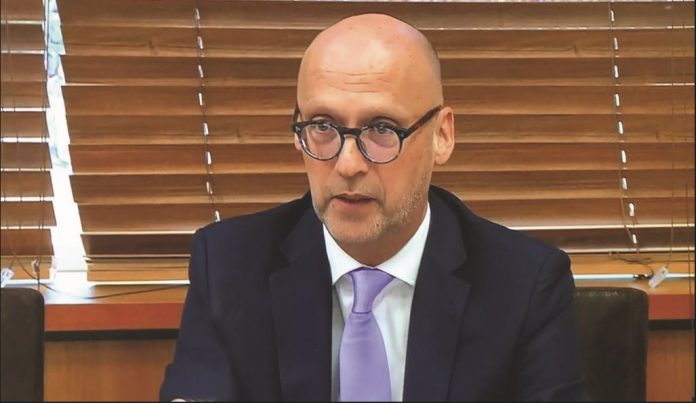
Interviewer: Is nature conservation a priority in Albania?
Henze:

I think that would change if the administration in Albania were to uphold law and order, if the sovereign – that is, the Albanian people – were at the centre of state action, and if the autocrat Rama were not to make a mockery of the sovereign.
The flamingo symbolises the state of affairs in Albania.
You could also replace the flamingo with an ordinary Albanian man, woman or child.
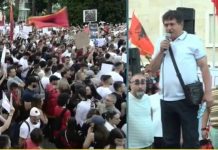
Ultimately, the mass demonstrations are about much more than that. They have now taken on the character of a democratic revolution; they are about the right to happiness, freedom and a future, and the protection of the Albanians’ livelihoods, as well as Albania’s nature and culture. The Albanians have had enough; they do not want to carry on like this.
Interviewer: So what is this actually about?
Henze: Since Rama’s second term in office, every parliamentary election since 2013 has been massively rigged. There has been a massive shift towards the occupation of Albania by the Rama family and his closest financial associates. Albania is degenerating into one of the most corrupt countries in the world and a de facto one-party state. The statistics on this are available. In 2025, Albania’s ranking on the international corruption index has once again deteriorated significantly.
When power is heavily concentrated, as in Albania, and independent oversight bodies are no longer effective – particularly in a culturally influenced, paternalistic country such as Albania – decisions are made in a non-transparent manner and/or obscured by multi-layered trust structures.
As the work of the media, the judiciary and anti-corruption authorities is simultaneously restricted within this system, it becomes more difficult to uncover or prosecute abuses if the patron’s structures do not consent to it.
Interviewer: What role does economic power play?
Henze: Well, Albania has effectively been sold off for years. Who benefits from this? The corrupt administration and the dependent investors. The people are becoming increasingly impoverished; since 2013, almost 1 million Albanians – a third of the total population – have fled, nature is being exploited and, with it, a central element of Albania is being destroyed. This also affects Albanian identity. Albanians have lived in harmony with their natural environment for centuries; it remains a fundamental part of Albanian culture to this day. Go, as I have, to the Albanian mountains in Valbona and spend the night in simple huts in the mountains, or visit the olive farmers, artists, musicians or the fishermen. If nature is destroyed, Albanian cultural identity and its unique language will be destroyed too. That would be a huge loss for the global community.
Construction and tourism projects often involve large sums of investment and can have a significant impact on the economy and the environment. That is why transparent tendering procedures, environmental assessments and public scrutiny are particularly important. International organisations also point out that, in most cases, the property and construction sectors in Albania can be exploited for money laundering.
Countless building sites are shrouding the country in dust and noise. Everywhere, there is sawing, drilling and grinding. Major projects under public-private partnerships are causing the country to grow skywards. In the immediate vicinity of Tirana’s main square alone, ten high-rise buildings are planned or already under construction. The brisk construction activity suggests an economic upswing, but there is another reason: the construction of these towers does not reflect actual demand, but serves the purpose of money laundering. In Albania, construction is a popular means used by the international community to launder money from the drug trade, human trafficking and the gambling industry. The fact that not everything is above board in this development is already evident from residential property prices. Despite an oversupply, prices continue to rise, yet hardly anyone lives in these buildings. A square metre in the capital now costs over 1,500 euros – an astonishingly high sum for a country where the average monthly wage is the equivalent of 500 euros. Yet, according to local media reports, at least tens of thousands of flats are standing empty. It appears that many expensive construction projects are being used for money laundering, for example by repaying construction loans with illicit funds. The Global Initiative against Transnational Organised Crime (GI TOC) estimates that between 2016 and 2018, more than 1.2 billion euros were laundered in the Albanian construction sector – and the trend is rising.
Since 2013, Albania has been establishing itself as a safe haven for investors. An unhealthy combination of illicit funds, drug trafficking involving cocaine and cannabis, and human trafficking is leading to a flood of capital and, consequently, the infiltration of the entire state system – a phenomenon known as corruption. Groups based in Albania have expanded into the international cocaine trade and established bases in Latin America – particularly in Ecuador and Colombia – as well as in Europe, for example in the Netherlands, Germany and Scandinavia. They have become part of the five largest criminal networks in Europe.
In this respect, it follows that the role of banks, insurance companies and logistics firms in Albania has grown exponentially over the last 12 years. Albania has become a hotspot for illicit funds from drug trafficking and extortion in Europe. “They are no longer just transport companies, but key players who control alliances, prices and markets for cocaine,” says Mejdini, head of the Southeast Europe Observatory at the Global Initiative Against Transnational Organised Crime (GI-TOC). Ultimately, when we look at the results of this development, it is being tolerated by the state. If this were not the case, there would be no corruption.
None of this could exist if Albania were a country governed by the rule of law and democracy.
Interviewer: And what have Albanian citizens noticed of late?
Henze: Unless the Albanian nation and the international community intervene, there is a risk that criminal money will become the norm in the economy, tourism and society.
In Albania, I heard from many Albanians that corruption, drug trafficking and black money are ‘normal’.
The shadow economy is heavily influenced by illicit funds. The construction industry, tourism and trade are particularly affected. The consequences are serious not only for the market, but also for the moral fabric of society and the natural environment. A typical trend is the emergence of a ‘narco-state’; here in the heart of Europe, in Albania, money still takes precedence over people, morality and respect.
When crime is regarded as normal across all social strata, behaviour based on the rule of law, democracy and humanity degenerates; it tears families apart.
This is not a healthy state of affairs for human rights in Albania, for people’s right to freedom, happiness and a future for their own children, or for the protection of nature and culture. Crime committed by the state and between individuals must not become the norm. In my view, the claim that it is ‘normal’ belongs in the dustbin of Albanian history; the Rama administration is not normal.
Interviewer: And what about the economy? What have you noticed there recently?
Henze: The distortion of competition in the market caused by illegal capital has been steadily increasing since Rama’s illegal parliamentary elections in 2013, 2017, 2021 and 2025, as has the repression against the population. This enables a handful of players to dominate entire sectors and exclude honest Albanian businesses. The consequences are the formation of monopolies and the elimination of genuine opportunities for success and innovation.
However, the consequences for businesses that engage with the administration are also cause for concern: they make themselves dependent – including on a personal level – and are forced to pay for the projects. We are not talking about small sums here, but billions.
The compromised structures in Albania, particularly in the business sector, should distance themselves from the Rama administration and take a stand through concrete, independent measures.
International pressure is useful insofar as the US, the EU and, in particular, France refrain from courting individuals such as Rama. This is a signal that the Albanian people need.
However, real change will only come about if there is internal pressure within Albania and if key staff members of state-controlled institutions, such as the secret services and the police, defect to civil society. These individuals are currently providing us with a wealth of documents detailing the criminal structures within the administration.
I have the impression that even in business circles it is finally becoming clear that things cannot go on like this and that the marginal costs are becoming too high for them personally and for their companies.
Albania has a constitution in name only. However, for the rule of law to be implemented, there must be acceptance of rules and a separation of powers. We cannot see evidence of either under the Rama government, which is currently the only party determining Albania’s policy.
Interviewer: Rama speaks of massive investment in construction and tourism that will secure the country’s future.
Henze: Certainly. You see, we in Europe – but also in Washington – have realised that when Rama speaks of Albania’s future, he means his own future and that of his organisation and the drug trade. That should not be confused. His organisation has tacitly occupied the country. The international press has coined a term for this and refers to the Rama ‘mafia government’.
Interviewer: And what about EU accession?
Henze: Under no circumstances. As long as Albania is governed by one of the most corrupt executive branches in the world, which fails to abide by international rules – as is currently the case with the Flamingo affair – this country has no place in Europe.
There is no basis for even considering it. The Rama family has no place in Brussels or Strasbourg.
We will uphold diplomatic conventions, which also means that we will speak with autocrats.
Should anyone in Brussels hold a different view, they should explain to the international community why one of the most corrupt countries in the world should be allowed to benefit from the funding mechanisms of the EU and the US.
Albania first needs a new, democratically elected government that has come to power legally, one that implements the criteria of the Copenhagen Declaration and fulfils the specific 10-point plan for Albania drawn up by the European Parliament and the German Bundestag in 2019; then we will take it from there.
Interviewer: And what about press freedom – doesn’t that act as a check and balance?
Henze: Albania continues to slip further down the Press Freedom Index in 2025. Albania wants to become an EU member, yet according to Reporters Without Borders and international experts, there is increasingly little press freedom left in Albania. The EU has failed to speak out clearly on this matter. Meanwhile, Rama insults journalists and mocks the EU. Take the summer of 2022, for example. Rama publicly rebuked a TV journalist at a press conference in front of rolling cameras and threatened him with ‘re-education’. Such remarks are typically associated only with dictatorships.
Von der Leyen should have spoken out critically at the time, but did not. This was one of the many mistakes made by the European Commission.
At the time, Rama had barred an Albanian expert from attending further government press conferences for three months. The journalist had asked critical questions about the activities of a major investor in the Albanian tourism sector. A female journalist was also barred for 30 days for asking about corruption within the ruling party. As in Russia, critical media outlets are under close scrutiny by the financial police and the security services. Although there is a public service broadcaster, it too is part of Rama’s administration/executive.
This is a serious development. Cases of intimidation, public insults, smear campaigns and strategic lawsuits against journalists (SLAPP suits), as well as intimidation and threats directed at their social circles, remain widespread. If an Albanian journalist faces fines far exceeding their monthly salary, they will tend towards ‘protocol-based reporting’, which can provide the public with hardly any quality information. I need only recall the amendments to the Albanian Media Act at the end of 2019, which were nothing more than a mechanism for censorship. The then President, Ilir Meta, vetoed the controversial laws, as they would have enabled draconian fines and state control over online media. This was followed by massive attacks in Parliament by the Rama organisation and its representative, Balla, against President Meta, and an attempt to remove him from office. The Venice Commission ultimately prevented this. The Rama organisation then sought other ways to restrict press freedom, as we can see very clearly from Reporters Without Borders’ Press Freedom Index. The then opponent of and defender of press freedom was, after the end of his term of office, subjected to baseless methods that had no basis in the rule of law – as in Russia – and linked to a campaign of disinformation and corruption. Ahead of the 2025 parliamentary elections, he was imprisoned in 2024 – in our view without any substantiated legal grounds – and remains in solitary confinement to this day.
The Navalny case appears to be repeating itself. We now have serious fears that Meta is being psychologically broken in prison and that his death cannot be ruled out. Regardless of which of the allegations are true or false, Meta is being held up by the Albanian regime as a cautionary example: this is the fate that awaits anyone who opposes Patron Rama and his family.
What strikes us is the contrast between the promises of reform put forward by the Rama government and the reality on the ground, where political, administrative and economic influence over the media remains strong.
This is because the organisation sees itself as the Albanian state and expects a systemic link between the state and the people. Anyone who acts against this state is against the Albanian people and must be rebuked in the ‘national interest’ – it is as simple as that in Albania.
Interviewer: Could this lead to a vicious circle?
Henze: In Albania, various factors reinforce one another:
- Oversight bodies are barely able to prevent corruption within their own executive and government, except in isolated cases where this is publicised internationally.
- Corruption massively facilitates the pursuit of special economic interests.
- Illegal financial flows attempt to exert influence on legitimate sectors of the economy.
- In the hands of an administration structured in this way, the central bank is, in effect, a ‘casino’, meaning that currency speculation cannot be ruled out and financial supervision is likely to be dysfunctional.
- A lack of transparency undermines environmental and nature conservation, as well as the protection of cultural heritage.
- Restricted press freedom leads to the dysfunction of the fourth estate.
- A politicised judiciary and security agencies.
- The concentration of political power permanently erodes democratic control, which in the long term will also lead to the dysfunction of the legislature – not on paper, but in reality.
Interviewer: What can be done now?
Henze: What I already said back in 2019 regarding the illegal demolition of the Albanian State Theatre. The sovereign – that is, the Albanian people – holds the power. They are the sovereign, not Rama, Balla or Olsi Rama.
If we now look at the situation in Albania, we ultimately see an occupation by a one-party organisation, a leadership and government that is highly corrupt, and that elections have been massively rigged time and again since 2013.
The result is that Albania is now governed at both local and national level by a one-party government, whose members have permeated the executive branch throughout the country. Consequently, the systems of checks and balances in Albania have ultimately been neutralised. Every now and then there is a specific kind of show trial – we call these ‘showcase trials’ – where a charade is staged and, in isolated cases, regime figures who have fallen out of favour are put on trial. Either, as they say in Albania, they are then given a one-year ‘luxury shower treatment’ . Or they are warned in good time and flee abroad, just as some of Rama’s deputies have done.
The last resort for protecting the constitution and the rights of the sovereign is resistance.
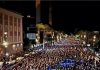
We are currently witnessing this in Albania. It shows us just how courageous the population is: hundreds of thousands of Albanians, many of them upright and patriotic, including children, women, men and the elderly. But it also shows us that Rama does not represent the people. And it shows us that the Albanian people are fed up with being treated by an autocrat as objects intended, in effect, to serve him.
In recent days, Rama and his organisation have laid themselves bare on the world stage and revealed their true colours. They are ridiculing the Albanian people and portraying them as ignorant and simple-minded.
Interviewer: And now?
Henze: If nothing else helps, the Albanian Constitution places the weapon of the right to resistance in the hands of the Albanian people to ensure their own survival. In a democracy, all state power emanates from the people, including in Albania.
The right to resistance permits the use of private force and suspends the civic duty to obey the law. Ultimately, this is a matter of emergency action by Albanian citizens to ward off attacks on the Albanian Constitution and the constitutional order. The scope of protection is thus clearly defined.
The means include mass demonstrations, insofar as they contribute to the restoration of public, social and economic order in Albania, and strikes. A strike may become a decisive means of choice for the protection of the Albanian state.
This is not about pursuing unilateral political objectives, but about restoring the constitutional state and eradicating government corruption.
The right to strike is an integral part of the freedom of association. As a legally binding treaty of the Council of Europe under international law, the European Convention on Human Rights (ESCR), for example, guarantees in Article 6(4) the right to collective action, including the right to strike, as does Article 51 of the Albanian Constitution. However, the decisive factor is the right to self-defence to protect the sovereign rights of the Albanian people.
In doing so, due regard must, of course, be paid to overriding public interests, such as health, safety and basic services.
The Albanian people have the right to resist. In 1991, the Albanians successfully carried out a democratic revolution entirely on their own and without international aid. At that time, everyone had had enough of the dictatorship.
It seems that by 2026, the Albanians will have had enough of the lack of freedom, the lack of prospects, lawlessness and the regime’s corruption, and will find themselves in the midst of a second democratic revolution.
Something that has long been under pressure is now coming to a head in Albania. I would never have thought that so many Albanians would dare to stand up against Rama’s autocracy. I have the utmost respect for the Albanian people. Brussels, Berlin, Paris and Washington should join in this respect with the utmost humility.
The Albanians have had enough: they have had enough of the theft of international aid funds, of drug trafficking and money laundering, and of the destruction of their culture and natural environment.
As the Albanians say: ‘Enough is enough.’ And not: ‘It’s all over once the game’s over’.
Interviewer: A final word
Henze: In Albania, this is not a matter of petty bribery, but of administrative and structural corruption exploiting the judicial, intelligence and police apparatus to the detriment of Albania and the international community.
The opposition is being neutralised, press freedom is restricted and the judiciary is politicised. There is a lack of transparency; conflicts of interest are only monitored to the extent permitted by the patron; and certain actors at home and abroad are repeatedly favoured.
Albania’s progress report consists of a single sentence: ‘The Albanians have realised that they are the people.’
As things stand in Albania at present, this situation cannot continue. We have the impression that Rama and his system are on their last legs. Centrifugal forces are currently at work. Rama’s confidants are quietly distancing themselves from him; they are beginning to speak out in Berlin, Brussels and Washington.
The state security sector is in the process of defecting. It is evident that massive capital transfers abroad are currently taking place. Consequently, a democratic change of government is likely to occur very soon. Rama is no longer tenable for the international community either. A narco-state is not in the interests of the US, China, Russia or the EU.
Albanian politics must regard it as a priority to get the country back on its feet. Anyone in Albanian politics today who does not stand up against Rama’s autocracy will not only be holding back all progress in Albania tomorrow, but will also be standing in the way of a future for the Albanian nation in Albania and for Albanian culture. There is no alternative to the opposition and resistance against Rama.
Albanian politics, like civil society, must now return to the goal of making Albania a place worth living in for everyone once again, and do everything in its power to ensure that this happens. The Albanian nation has already squandered many years and failed to tackle many issues that it should have addressed long ago. And this applies not only to Albanian politics, but to Albanian society as a whole. ‘Xhiro’ – directed at representatives of the Rama administration – should become a habit. Their time must be over.
Albania is a fantastic country, with a rich cultural tradition that has had a formative influence on Western culture, a stunning natural environment and language, and deeply impressive people. In this respect, we look forward to welcoming this country into Europe, with a new government that upholds civilised standards and reintroduces the rule of law and democracy, so that Albania once again becomes a country that offers prospects for the future for all Albanian refugees, both men and women.
Albania belongs to the Albanians; the Albanians are the people, and no one else.